

Here are your July community updates:
- Upcoming Events
- Funding Opportunities
- Employment Opportunities / Fellowships
- Awards / Recognition
- Research
- Global Health Community Highlights
- Travel Health, Safety, and Security Updates
- MGB Government Affairs Presentation
- MGH Global Health Community Meeting
- Opportunities to Engage
If you have an item to include in a future newsletter, let us know! Please write to us at cghadmin@mgh.harvard.edu.
Upcoming Events
MGH/BWH Global Health Grand Rounds will resume in September.
Funding Opportunities
- Wyss Global Health Scholars Program – With the generous support of the Wyss Medical Foundation, the Massachusetts General Hospital Center for Global Health (CGH) is now accepting proposals for the inaugural Wyss Global Health Scholars Program. The deadline for submission is August 15, 2025. The Wyss Global Health Scholars Program will provide up to $150,000 per year for up to two years ($300,000 total) to applicants likely to create lasting health impact in underserved global communities. The program seeks to support the clinical care, teaching, research, and innovation work of the most promising global health physicians and healthcare providers, especially those working in multinational teams that together bring their talents to address both clinical care and clinical research needs of communities in the global south, in equitable partnership with those communities. Click on this link for more details regarding eligibility and timeline and to access the application form. Contact Jodi Ansel at jansel@mgh.harvard.edu with any questions.
- Scholarships for Global Health Advancement – The Massachusetts General Hospital Center for Global Health (CGH) is now accepting proposals for the Scholarships for Global Health Advancement Program. The deadline for submission is August 15, 2025. The MGH Center for Global Health is committed to increasing capacity of medical providers to create lasting health impact in underserved global communities. It is within this context that we invite MGH faculty/clinicians to apply for funds to support in-country health education and skills-building training for doctors, nurses, and allied health personnel from low-income countries. Through this mechanism, MGH faculty/clinicians may apply for funding on behalf of a global collaborator in their pursuit of in-country medical education, specialized training, advanced degree, and/or other locally based skills building courses. CGH will fund awards of up to $20,000/each, beginning September 1, 2025. The duration of the award will depend on the length of the program supported by the scholarship. Click here for more information and access the application through this form. Contact Jodi Ansel at jansel@mgh.harvard.edu with any questions.
- Global Health Service Awards – The MGH Global Health Service Awards were created to recognize people whose goal is to inspire, advance, and improve the clinical care and capacity for underserved populations, and to emphasize the importance and benefits of global collaboration in healthcare. All employees of Massachusetts General Hospital and global partners are eligible for an award under this program. Work in global health can occur in our local and global communities. Awards fall under the following three categories: Excellence in Research and Innovation, Excellence in Clinical Education and Mentorship, and Excellence in Global Disaster Response & Humanitarian Action. Click on this link to learn more about the awards and submit nominations by accessing this form. Contact cghadmin@mgh.harvard.edu with any questions.
- MGH Center for Global Health Finish Line Grant (GHFLG) – Do you have a project that’s near completion? Do you need just a little more support to finish it? This grant program aims to serve as a catalyst for the completion of projects – as well as a way to support mentorship between MGH Global Health faculty and junior investigators and trainees. GHFLG awards can range from $500-$2,500 per award each year and are awarded on a rolling basis. They can be used to pay for protected time, childcare costs and more. See this document for more information and how to apply. Contact Lindsey Garrison at legarrison@mgh.harvard.edu with questions.
- Identifying external funding opportunities with PIVOT – PIVOT is a library database that indexes funding announcements from government agencies, private foundations and nonprofits, and international sponsors. It contains information from disciplines including (but not limited to) medicine, the physical and social sciences, as well as engineering. For more information and to create your PIVOT account today, see this document. An in-depth presentation is also available here. Amy Robb, Associate Director of Prospective Research and Funding Opportunities, Corporate and Foundation Relations in the MGH Development Office, is the facilitator of the PIVOT database.
Employment Opportunities / Fellowships
Fellowships
- Training Program in Psychiatric Genetics and Translational Research (T32) – This program, led by Karestan Koenen, PhD, JP Onnela, PhD and CGH faculty member Alexander Tsai, MD, brings together faculty from the Harvard T.H. Chan School of Public Health and the MGH Division of Global Psychiatry to train epidemiologists, biostatisticians, and physician and non-physician clinicians with interests in a broad range of inquiry relevant to psychiatric genetics and analytical methods for translational mental health research, including global mental health, social and behavioral science, and psychiatric epidemiology. We offer dedicated mentorship, didactic seminars, formal coursework throughout Harvard-affiliated institutions, and access to a diverse community of cross-disciplinary scholars. Funding is for up to three years and includes salary, MPH tuition, travel to professional meetings, and other training-related expenses. Applications are accepted on a rolling basis. Please note: we have not yet received the notice of grant award but one is expected, and formal offers cannot be made until the notice of grant award is received. Please reach out to Dr. Tsai with questions at actsai@mgh.harvard.edu.
- Thomas S. Durant Fellowship – This 1-year fellowship sponsors healthcare professionals to serve victims of complex humanitarian disasters.This fellowship, which provides up to $75,000 for the year, fosters in its recipients a sense of commitment to populations in distress and provides opportunities to develop professionalism in humanitarian response. All MGH and BWH employees are eligible to apply. If interested, contact globaldisasterresponse@partners.org.
The MGH Center for Global Health is Hiring!
Awards / Recognition
New Fellows in the Global NCD Research Training Program Started July 1, 2025
-
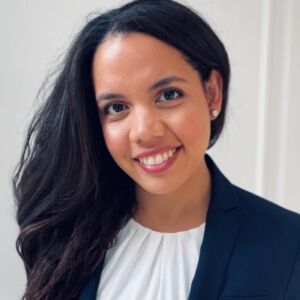
- Lianet Vazquez, MD will work with Dr. Salmaan Keshavjee at Harvard Medical School. Her research project is titled, “A community health worker Point-of-Care Ultrasound program to screen for and triage heart disease associated risk and morbidity among refugee populations in the Middle East and North Africa region.”
-

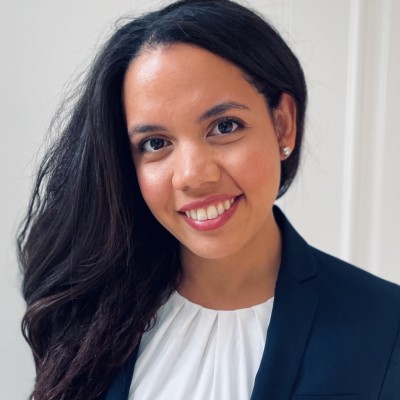
- Itai Magodoro, MD, MSc, MMSc will work with Dr. Mark Siedner. His research project is titled, “The epidemiology and mechanisms of obesity-related cardiometabolic disease in HIV infection in sub-Saharan Africa.”

MGH Global Health Community Engagement Awardee Activities
The MGH Global Health Community Engagement Awardees committed to work that improved health equity, supported their community, and demonstrated humanitarian service. Read below for to learn about the work this award supported.
Lucy (Seungwon) Lee: Global Health Research in Conakry, Guinea

Photo: A young child who came in for epilepsy.
In late April, Lucy Lee, a research intern and incoming medical student at Harvard Medical school, had the opportunity to join Dr. Farrah Mateen on a two-week global health research trip to Conakry, Guinea. She worked closely with the Neurology Department at Ignace Deen Hospital, led by Dr. Abass. Their primary focus was to assess cognitive function in individuals living with epilepsy using the Montreal Cognitive Assessment (MoCA). They conducted in-depth interviews with over 50 patients, both medicated and unmedicated, gathering not only clinical data but also rich narratives about their treatment history, access to care, and the persistent social stigma surrounding epilepsy in Guinea. This research shed light on the complex intersections between health, poverty, and stigma, revealing critical gaps in access to neurological care in resource-limited settings.
In addition to research, Lee assisted Dr. Mateen in evaluating approximately 200 patients with epilepsy, neuromyelitis optica (NMO), multiple sclerosis (MS), and other neurological disorders. Many of these conditions are severely under-researched in low-income countries, lacking any baseline epidemiological data, and receive little global research attention. One particularly striking case involved a young girl who was expelled from school due to untreated seizures, which is an issue that could have been resolved with basic anti-epileptic medication. Through Dr. Mateen’s clinic, the young girl received treatment and a renewed hope of returning to school. Witnessing her struggle underscored how layers of disadvantage, such as gender, socioeconomic status, and geographic isolation, compound when accessing the few neurology services available, reminding Lee that genuine health equity demands impactful research and community-based solutions that address these intersecting barriers. Overall, Lee is deeply grateful for this opportunity that allowed her to witness and learn from global neurology care in a profoundly meaningful way.
Research
NIH Update on Foreign Subcontracts on Active Projects
This applies to applications submitted prior to May 1, 2025 and projects active on or before May 1, 2025.
NIH Institute, Centers, and Offices (ICOs) have the option to renegotiate the award structure with a recipient so that foreign subawards are financially removed from the primary award and are awarded as administrative supplements (i.e., Type 3 awards). Each foreign supplement will only include funds allocated for a single foreign entity, allowing NIH better ability to track obligations to foreign entities. The award and foreign supplements will be granted to the prime institution, which will then subcontract to the foreign organization.
To ensure NIH’s financial management and reporting goals will be met from tis structure, both the primary award and foreign supplement(s) will be removed from the streamlined non-competing award process (SNAP) and automatic carryforward authority. The primary award and each foreign supplement will be issued with a distinct document number and will need to submit separate annual Federal Financial Reports (FFRs). There will be no rebudgeting allowed between the primary award and supplements within a budget period, although recipients may use the annual RPPR process as an opportunity to request a reallocation of future year commitments between the primary and foreign supplement awards, provided the total cost across all awards does not exceed previous committed levels.
Please reach out to Lindsey Garrison (legarrison@mgh.harvard.edu) or your post-award grants administrator with any questions. Visit this link to read the full notice.
Supporting Fairness and Originality in NIH Research Applications
This policy is effective for applications submitted to the NIH from September 25, 2025 onward.
NIH will not consider applications that are either substantially developed by AI or contain sections substantially developed by AI, to be original ideas of applicants. If the detection of AI is identified post award, NIH may refer the matter to the office of Research Integrity to determine whether there is research misconduct while simultaneously taking enforcement actions including but not limited to disallowing costs, withholding future awards, wholly or in part suspending the grant, and possible termination.
NIH will only accept six new, renewal, resubmission, or revision applications from an individual Principal Investigator/Program Director or Multiple Principal Investigator for all council rounds in a calendar year. This policy applies to all activity codes except T activity codes and R13 Conference Grant applications.
NIH Funding Termination Guidance
Paul J. Anderson, MD, PhD–Chief Academic Officer sent an email with directions on how to prepare for the possibility of grant terminations and navigate a response.
What to do if your grant is affected
We expect that when the NIH identifies a grant it deems in violation, it will contact PIs and Research Management simultaneously. The request will be to remove the problematic elements so funding can continue. In some cases, the NIH may determine the entirety of the grant is in conflict and move to terminate it. In either scenario, PIs who receive notification of grant disruptions from the NIH should alert their Research Management contact immediately to collaborate on a response, as there might be cases where the notification is not sent to Research Management.
If the grant is terminated, please refer to this document, which outlines the specific details of the early termination process.
Biostatistical Support
CGH works with a PhD level statistician, who can offer biostatistical support as needed. Please contact Jessica Haberer at jhaberer@mgb.org with details about your biostatistical needs.
Publication Highlight: “Health Hazards of Migration in People Seeking Asylum in New York City, 2023“
In this peer-reviewed paper, the team evaluated hazards experienced by people migrating through Latin America, including the Darién Jungle in Panama. Click on this link to access the full paper.
Recent Publications
Here is a selection of our community’s recent publications, alphabetized by first author. To share your published work in the next newsletter, please email cghadmin@mgh.harvard.edu.
- Anutrakulchai, Sirirat, Sajja Tatiyanupanwong, Sarassawan Kananuraks, Eakalak Lukkanalikitkul, Sawinee Kongpetch, Wijittra Chotmongkol, Michael G. Morley et al. “Effect of the Chronic Kidney Disease—Peritoneal Dialysis (CKD-PD) App on Improvement of Overhydration Treatment in Patients on Peritoneal Dialysis: Randomized Controlled Trial.” Journal of medical Internet research 27 (2025): e70641.
- Chakrapani, Venkatesan, P. V. M. Lakshmi, Alexander C. Tsai, Vijin Pandara Purayil, Pradeep Kumar, Rajesh Kumar, Chinmoyee Das, and Shobini Rajan. “The syndemic of incarceration, violence victimisation, needle/syringe sharing, & HIV infection: A population-based study of men who inject drugs in India.” The Indian Journal of Medical Research 161, no. 3 (2025): 248.
- Doran, J., S. Shun, C. Carlson, S. Onyango, J. Tumwesigyire, F. Atwiine, D. C. Christiani et al. “Regional and Age-Related Differences in Correlates of Biomass-Associated Air Pollution Exposure and Subjective Assessments of Indoor Air Quality in Uganda.” American Journal of Respiratory and Critical Care Medicine 211, no. Abstracts (2025): A2113-A2113.
- Lee, Mi-Sun S., Crystal M. North, Irada Choudhuri, Subrata K. Biswas, Abby F. Fleisch, Afifah Farooque, Diane Bao et al. “Arsenic exposure is associated with elevated sweat chloride concentration and airflow obstruction among adults in Bangladesh: A cross-sectional study.” PloS one 20, no. 5 (2025): e0311711.
- Mace, Ryan A., Joshua E. Cohen, Christopher Lyons, Christine Ritchie, Stephen Bartels, Olivia I. Okereke, Bettina B. Hoeppner, Judson Brewer, Jin hui Joo, and Ana-Maria Vranceanu. “Socio-ecological barriers to behavior change-oriented dementia prevention: a qualitative study of healthcare professionals’ perspectives.” Aging & Mental Health 29, no. 6 (2025): 1055-1064.
- Magodoro, Itai M., Katalin A. Wilkinson, Brian L. Claggett, Ntobeko AB Ntusi, and Robert J. Wilkinson. “Discordance between measures of Mycobacterium tuberculosis sensitization and type 2 diabetes mellitus in the United States (NHANES): A population-based cohort study.” Journal of Infection (2025): 106496.
- Najmi, Zahra, and Annekathryn Goodman. “69 Prevalence of port-site metastasis in laparoscopic surgeries for gynecologic cancers and its risk factors: A systematic review and meta analysis.” Journal of Clinical and Translational Science 9, no. s1 (2025): 21-22.
- Nuwagira, E., S. G. Mpagama, C. K. Muzoora, J. Mugerwa, M. Ssemusu, B. W. Allwood, F. Bajunirwe, M. J. Siedner, and P. S. Lai. “The Association of Pretreatment Nutritional Status With Lung Function After Microbiologic Tuberculosis Cure.” American Journal of Respiratory and Critical Care Medicine 211, no. Abstracts (2025): A1034-A1034.
- Xu, Hanmeng, Amanda Tiffany, Francisco J. Luquero, Suman Kanungo, Godfrey Bwire, Firdausi Qadri, Daniela Garone et al. “Protection from killed whole-cell cholera vaccines: a systematic review and meta-analysis.” The Lancet Global Health 13, no. 7 (2025): e1203-e1212.
- Zhen-Duan, Jenny, and Alexander C. Tsai. “Invited commentary: mental health services utilization disparities at the intersection of Asian ethnoracial identity and limited English proficiency.” American journal of epidemiology 194, no. 4 (2025): 941-945.
Global Health Community Highlights
Strengthening Midwifery Education in Sierra Leone: A Global Nursing Collaboration
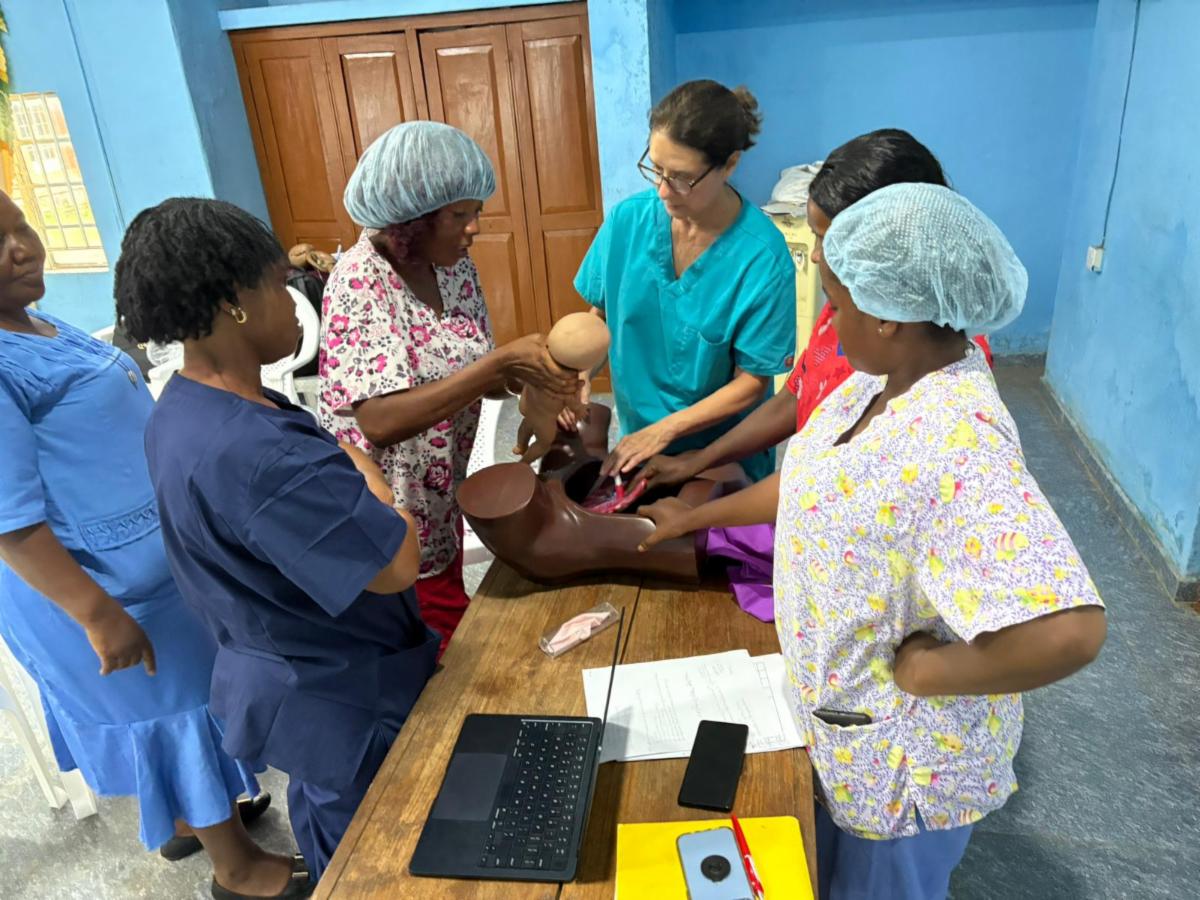
Bobbie Curtis leading a training session for hospital nurses on managing shoulder dystocia during childbirth.
Sierra Leone has achieved a major milestone in maternal health, reducing maternal deaths from 443 to 354 per 100,000 live births between 2020 and 2023. Announced on World Health Day 2025, this marks the country’s fastest progress in eight years and brings it closer to its 2025 goal of fewer than 300 deaths per 100,000.
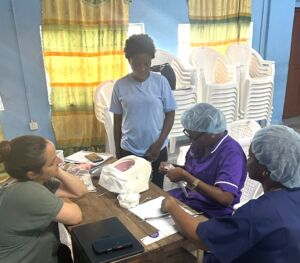
Caroline Regelous guiding midwife preceptors through hands-on training in laceration repair.
In June 2025, Global Nursing Fellows and Certified Nurse Midwives Barbara “Bobbie” Curtis and Caroline Regelous accompanied Mary Sebert, Global Nursing Associate Director, to Sierra Leone to support midwifery education and training. Bobbie and Caroline worked closely with diploma students at the Kenema School of Midwifery, the most recently opened midwifery school in the country, bringing the total number to four. Their efforts focused on classroom teaching, simulation training, and bedside skill-building to strengthen both student learning and preceptor development.
Together with SEED Global Health Educators and local faculty, the team trained midwifery students, preceptors, hospital nurses and midwives. Core topics included newborn assessment, postpartum warning signs and complications, and shoulder dystocia management. Simulation-based sessions reinforced hands-on learning in perineal repair, postpartum checks, and newborn evaluations.
While Bobbie and Caroline focused their teaching in Kenema, Mary worked with SEED Educators across three Schools of Midwifery, including Kenema, Bo, and Makeni, delivering Nursing Leadership training as part of the year-long Midwife Preceptor Training Program. Sessions included topics such as communication, conflict resolution, problem-solving, and team building, strengthening the leadership capacity of midwifery educators throughout Sierra Leone.
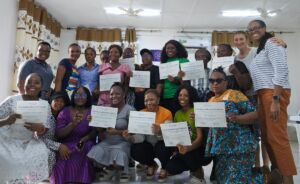
Mary Sebert with midwife preceptors in Bo, Sierra Leone, following completion of the Nursing Leadership Training Program.
Though the team faced scheduling changes and occasional language barriers, flexibility and collaboration proved key. Fellows adapted by providing one-on-one mentorship and reinforcing key concepts through repetition and discussion. Successes ranged from midwives confidently demonstrating emergency maneuvers to deep conversations about their careers and commitment to women’s health.
This partnership exemplifies the powerful role global nursing collaborations play in building midwifery capacity, supporting preceptors, and improving maternal and newborn outcomes in Sierra Leone.
Travel Health, Safety, and Security Updates
JUNE 20, 2025 – Important Travel Alert Update
Part B: Travel deferral guidance for Saudi Arabia, United Arab Emirates, Qatar, Bahrain, Oman and Kuwait
Summary: Employees Must Defer Travel & Transit* Until Further Notice (2 weeks, through July 7, 2025). Travel & transit may be permitted, subject to MGB CFO approval and business urgency.
This Deferral may be extended beyond July 7 should applicable circumstances and conditions deem necessary. Please confer with MGB Risk and Insurance Services (Ryan Wildes) for updates (travelsafe@mgb.org; rwildes@mgb.org; 857-282-0951).
Please visit the TravelSafe site for more details on this update.
JUNE 10, 2025 – Updates to the High Consequence Infectious Diseases (HCID) Policy
The HCID committee continues to track outbreaks of HCIDs globally and adjust their approach. Several changes to HCID related Best Practice Advisories (BPAs) and the HCID Watch List are in effect as of June 10, 2025.
- Access all HCID Resources on MGB IC Vitals
- Employees with planned travel to, or returning travel from impacted countries, should review the Policy for Employee Travel to Locations with Risks of Transmission of High Consequence Infectious Diseases
MGB Government Affairs Presentation
On Wednesday, March 26th, the Mass General Brigham Office of Government Affairs presented on how executive and federal actions are impacting global health work. CGH was joined by Chris Philbin, Vice President, and Maria Rios, Policy Director, UAR, from MGB Government Affairs. The purpose of this meeting was to ensure that those in the Global Health community were aware of the MGB Government Affairs office, how they operate, how they are responding to actions from the federal government, and to add to their understanding of how our sector is impacted.
The MGB Office of Government Affairs engages with government officials to help shape public policy and legislation to ensure that it best serves the interests of our patients, employees and communities. Learn more about MGB Government Affairs here.
Visit this link to learn about the MGB Advocacy Policy. View meeting recording here.
MGH Global Health Community Meeting
Every month, members of the MGH Global Health community gather to hear updates from all the different divisions. Click here to view highlights from last month’s meeting.
Opportunities to Engage
- The MGH Center for Global Health has developed a clinical academic partnership with the University of Global Health Equity (UGHE). UGHE is a global university based in rural northern Rwanda, founded by Partners in Health, which aims to transform global health delivery by reimagining medical education. Amongst other programs, the university is training medical students as part of a MBBS program and is looking for visiting faculty on their clinical clerkships. If you are interest in teaching at UGHE as Visiting Faculty, please contact cghadmin@mgh.harvard.edu.
- Interested in becoming a Global Health Faculty Associate or Affiliate? Learn more here.
- Mass General’s Hispanic Psychiatry Clinic is continuing to grow. They are accepting referrals for monolingual Spanish-speaking patients who receive primary specialty care at MGH. PCPs can refer patients for psychopharmacology services via the PTIS Epic referral or contact the clinic at 617-643-7998.
- We are building a Global Health Library in our office. Feel free to stop by, check out a book and please add books to the list here. Some suggested topics to get you thinking include: diversity, equity and inclusion, global health, leadership and decolonizing global health. We are excited to see your picks!
Keep in Touch!
All past issues of this monthly newsletter are available on our website. Just click here, or on “Stories” under “NEWS & EVENTS” on the Center for Global Health website.
If you want to include a news item, opportunity or anything else in a future monthly newsletter, you can reach us at cghadmin@mgh.harvard.edu.


